A five-phase partnership model to build local support for renewables
How can local authorities ease citizen resistance to new renewable energy plants and facilities? A new report answers with a partnership model for municipalities, the result of a two-year project, “The Future Green Energy and the Citizens”, run by the Danish Board of Technology and Deltager Danmark (Participation Denmark).
The model divides the process of building a partnership into five phases, centred on a local dialogue forum bringing together representatives of all local stakeholders. Organised around the culture of the local community, this kind of dialogue can build local ownership and legitimacy, lead to better informed decisions, a more efficient use of resources and more innovative solutions, and save time by letting stakeholders resolve misunderstandings and conflicts as they arise rather than later.
Presenting the trade-offs at citizen summits
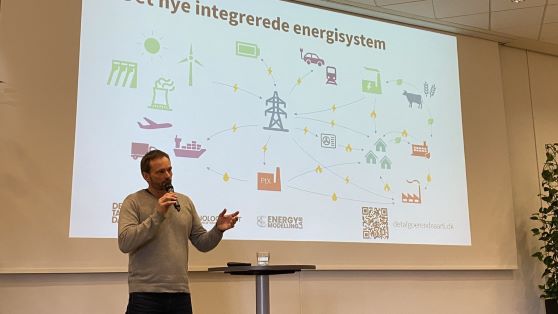
The project ran in the municipalities of Kalundborg, Vordingborg and Holbæk, where local citizens took part in meetings including “citizen summits”. We took part as independent experts in energy planning, presenting possible scenarios for the green transition of the local energy supply.
To help participants grasp the practical implications, we presented detailed charts, including the land area needed to produce 1 million MWh from solar, wind and biomass respectively, and the expected rise in electricity demand alongside the production increase needed to meet it. The resulting report is titled “Fra Modstand til Medvind” (From Resistance to Tailwind).
Turning citizen resistance into support for the green transition
We built the scenario charts and land use comparisons presented at the citizen summits, showing what different renewable technologies would mean in practice for the local area.
The dialogue forums worked through five phases with representatives of all local stakeholders, iterating on the scenarios as questions and concerns were raised at each summit.
By taking part as independent experts at citizen summits in Kalundborg, Vordingborg and Holbæk, we helped build the shared understanding that let local stakeholders reach agreement and take ownership of their own green transition.
Client: The Danish Board of Technology
Reference: Fremtidens Grønne Energi og Borgerne (“Future Green Energy and the Citizens”)
Collaborators: Deltager Danmark (Participation Denmark); contact Niels-Kristian Tjelle Holm
EML team: Ida Græsted Jensen, Kenneth Karlsson
Budget: DKK 100,000
Duration: 2022 to 2023
Model: Not applicable (stakeholder engagement project)