Educating the future generation on how to tackle the climate crisis is essential. Energy Modelling Lab has developed a new educational platform KAOS, containing exercises within Mathematics, Social science, Geography, and Physics.
The platform focuses on climate change and energy system modelling and provides the students with the challenging task within Energy systems and planning, Carbon budgets, agriculture scenarios, and more.
When discussing how expensive the green transition becomes for Danish society, it is important to consider more aspects than the investments needed.
Our results show that when looking solely at the saved health costs from the reduction in air pollution, society can save 10 to 20 billion Danish kroner per year.
Several Danish studies estimate the cost of transition to be approximately 13 to 26 billion Danish kroner a year from 2025 to the year when the transition is complete. These costs often do not include savings for society in terms of e.g., less air pollution.
The Korea New Green Deal highlights that a total of $15.3 billion is invested, in Zero Energy Public Buildings by 2025. The focus on Zero Energy Buildings has a specific target on schools including remodeling old school buildings. The aim is to make them energy-efficient and run on solar power.
In this study, the Energy Modeling Lab analyses the impacts of changing the energy supply in South Korea’s school buildings. The three focus areas are greenhouse gasses, air pollution, and health, and economic consequences.
IEA (International Energy Agency) Technology Collaboration Programme ETSAP (Energy Technology Systems Analysis Program) – iea-etsap.org
EML is an active member of the ETSAP community. EML has and continues to contribute to the ETSAP community in 2020 and 2021. We continue the Danish collaboration and participation at the IEA-ETSAP, Annex X to XIV under the new Annex XV. Our partners and consultants are actively developing TIMES models in several projects, regularly attend ETSAP’s biannual workshops and webinars, took VEDA-TIMES training, were and will continue teaching energy systems analysis courses at the post-graduate level by deploying the TIMES framework, develop auxiliary tools to improve pre-and post-processing tasks and successfully migrated from VEDA1 to VEDA2 during ongoing projects.
The work builds on the NETP projects by complementing the cost-effective pathways with a deeper analysis of uncertainty and alternative socio-technical framework conditions. This includes policy, technology shifts, economic outlook, developments in other countries and other societal changes that have an impact on the Nordic region – DK, FI ,IS ,NO and SE.
This project develops an independent study of the Ukrainian energy system, which analyses development scenarios for input to national energy strategy documents and provides policy recommendations to achieve national energy and climate goals. Furthermore, the modelling results of this project can also be used to contribute to the National Energy and Climate Change Plan for the period 2021-2030 (NECP).
The objective of the project is that Vietnam’s energy system becomes more sustainable through the implementation of cost-optimized policy and planning by assisting MOIT and EREA to commission, develop, and analyze comprehensive long-term energy scenarios.
This technical assistance tackles the needs of Azerbaijan to review and update the Long-Term Energy Strategy (LTES) in light of the recent situation in AZ. Another important focus in this technical assistance is to build up capacity in Azerbaijan to continue the work with LTES and in general to work with energy system analysis as a method for planning future investments and points of focus.
Meetings
Biannual workshops
The biannual workshops focus on the practice of modelling and use of ETSAP tools e.g. MARKAL/TIMES modelling frameworks, participation in training activities, and collaboration in projects related to the improvement of ETSAP tools. In general, the contribution to these workshops shall be based on current and future projects, particularly within EU, Nordic, and Danish research programs – by involving PhD students from Danish universities.
Our director and partners participated in several IEA-ETSAP semi-annual meetings over the last years:
For all past and coming workshops please see here.
Webinars
Members of EML attended several ETSAP webinars:
2020-11-26: How to build a TIMES model from scratch
2020-12-10: Modelling clean energy transitions: approaches and tools for the World Energy Outlook and the Energy Technology Perspectives
2021-01-21: Developing and using TIMES models with git, GitHub, and VEDA
2021-02-23: ETSAP webinar: High temporal and spatial resolution modelling in TIMES models
2021-03-30: Stochastic Modelling of VRES in TIMES and Modelling high VRES with hourly TS resolution, unit commitment, dispatch, and capacity expansion in TIMES
Training
Ida participated in the 3 day ETSAP VEDA-Times web training.
2020-12-09 to 2020-12-11: Basic Training Course on VEDA-TIMES, Web Training by Maurizio Gargiulo from E4SMA
EML is teaching energy system modelling on the basis of the TIMES modelling framework. In the current term, Mikkel and Kenneth are offering the course TIMES-DK modelling to graduate students at SDU. The duration is approx. 20 weeks from February to June 2021.
Background
The students are given insights into the TIMES modelling framework and will deploy the Danish model TIMES-DK to assess the Danish energy systems within the scope of their assignments.
Objectives
The course aims to provide the students with knowledge and abilities to work in the TIMES framework, which includes but is not limited to the following topics:
Sector coupling of the full energy system
Time aspect in the making of energy system assessment
Resource barriers such as bioenergy, wind, solar, and fossil potentials
Carbon budgets and national GHG targets
Method
Weekly lectures combined with practical assignments and project work in groups. The results of case works are an integrated part of the teaching and will be presented and evaluated during the course.
Auxilliary tools
At EML we develop several auxiliary tools. Currently, we are working on two tools, one to include biomass potentials for energy use in our analysis and the other to seamlessly aggregate and transmit data from a VEDA batch export Excel file to our websites hosted by Tokni:
A biomass model – for more information contact Ida
Within the Nordic Clean Energy Scenarios (NCES2020) project EML migrated the development of the open-source Nordic TIMES model (ON-TIMES) from VEDA1 to VEDA2. It includes all of the 5 Nordic countries, i.e. Denmark, Finland, Iceland, Norway, and Sweden and serves the purpose of informing decision-makers and supporting the common Nordic commitment to carbon neutrality through strong, collaborative Nordic research and analysis.
Energy Modelling Lab is engaging in the biannual ETSAP workshops, that focus on the practice of modelling. We also participate in training activities and collaboration on projects related to the improvement of ETSAP tools such as the TIMES models.
The contributions to these workshops are based on current and future projects, particularly within EU, Nordic, and Danish research programs.
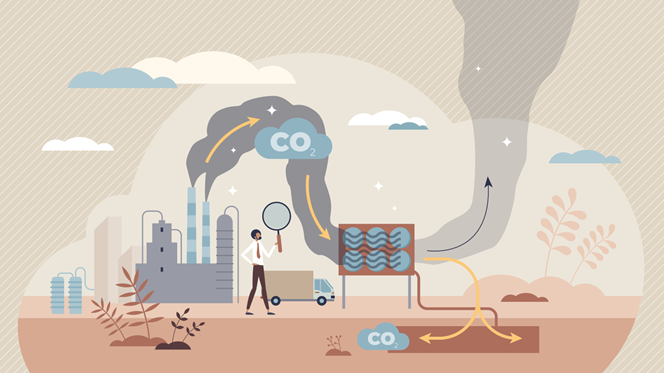
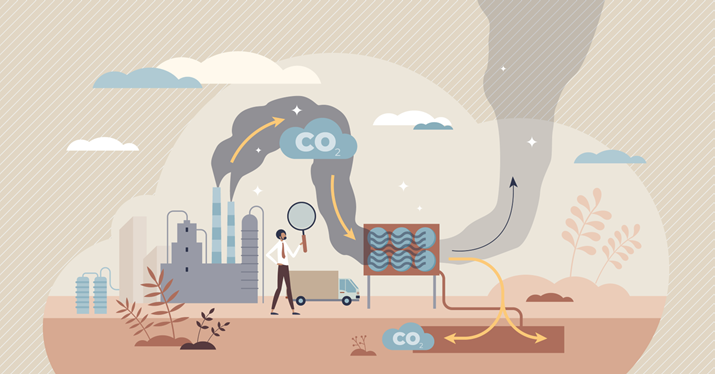
We have been adding carbon capture to TIMES-DK as it is a key piece in the future energy puzzle to capture carbon. CO2 is captured directly from the air, from industry chimneys, or in agriculture. This carbon can be used for two things. Either you can produce CO2-neutral fuels through Power2X technologies. Alternatively, the CO2 can be stored in the ground.
The project investigates the cost, potential, and limitations of the carbon streams.
MODELLING The new technologies, which can deliver and utilize carbon capture, were added to the Danish Energy System Model (TIMES-DK). This allows the model to run scenarios that achieve long-term climate neutrality.
It is crucial to select suitable time slices in an energy model. Including time intervals with high demand is important, since leaving them out might create misleading results and bad investments.
Energy Modelling Lab created a smart tool for flexible time slice selection. The tool has been designed for the Danish energy system model (TIMES-DK).