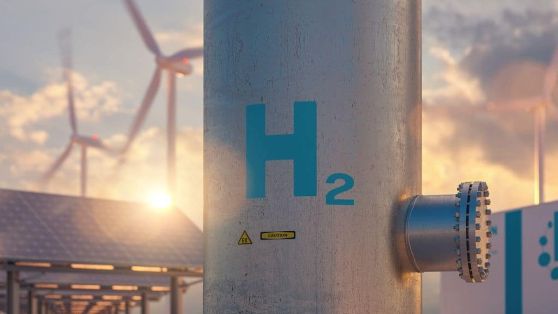
The PtX Infrastructure project evaluates Danish investment options for hydrogen and CO2 infrastructure, so that green fuel production can be planned within an integrated European energy system rather than in isolation. The work involves eight partner organisations, with Energy Modelling Lab providing energy systems modelling through the TIMES-NEU model.
The consortium set out to address three gaps in existing analysis: the lack of feasibility studies on CO2 infrastructure and storage options for hydrogen and carbon dioxide, the tendency to optimise energy infrastructure in silos rather than together, and the tendency for PtX planning to focus on national needs without representing uncertainty. Three complementary models, Balmorel, PyPSA-Eur-Sec and TIMES, are used together to build an integrated view and run detailed uncertainty analysis.
Mapping Danish hydrogen demand and export potential
The project is producing hydrogen demand trajectories by region, including feedstock use in e-fuels such as e-methanol and ammonia, estimates of the scale and reach of Danish hydrogen export, electricity demand projections by sector for Denmark, Sweden, Norway, Germany and Poland, and pathways for CO2 reduction in the power and heat sectors together with CO2 utilisation and storage scenarios.
TIMES-NEU covers Norway, Denmark, Sweden, Germany and Poland, with additional data for the Netherlands, Belgium and the UK. It uses 56 time slices per year to capture seasonal and within year variation, models global trade across 40 energy carriers, and represents aviation, shipping, iron and steel alongside the more conventional sectors. EML built the model in 2022 following the TIMES framework developed under ETSAP.
Scenarios are used to compare hydrogen against direct electrification across the modelled sectors and countries, so that the competitive dynamics between the two options can be tested under different conditions.
Findings feed into the MissionGreenFuels partnership and its advisory board, which includes Energinet, the Danish Energy Agency, Maersk, Technische Universitat Berlin and VTT, alongside project partners DTU MAN, DTU Compute, Aalborg University PLAN, EA Energy Analysis, Evida, GSD and PlanEnergi.