Modelling Denmark's existing and future biogas plants
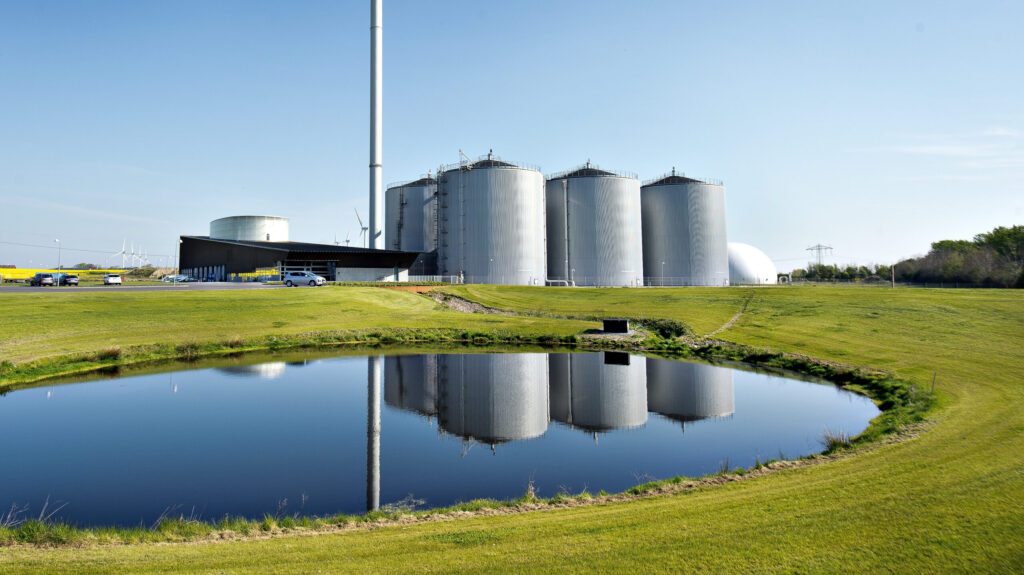
Biogas plays an important role in the Danish energy system, so it is important to have a detailed representation of both existing and potential biogas technologies in the TIMES models. Energy Modelling Lab has developed a new, detailed biogas module in collaboration with the Danish Energy Agency, covering all 89 existing Danish biogas plants, including Maabjerg Bioenergy in Holstebro, and allowing the model to invest in new biogas plants when searching for solutions to cover future energy demand.
Each plant can take classic biomasses such as manure or straw as input and generates both biogas and a fiber fraction, which can be utilised in processes such as pyrolysis. The module is also ready to use new types of biomass, such as seaweed, in future biogas plants.
Restrictions and regulation
A couple of restrictions have been added to the biogas plants so that model results become more realistic: a maximum dry matter content for each biogas plant, and a maximum of 4 percent energy crops in the biomass input from 2024, based on new regulations adopted in April 2022.
Modelling Denmark's existing and future biogas plants
IntERACT is EML’s biogas module, built within the TIMES framework, representing all 89 existing Danish biogas plants and enabling new plant investment options in future energy system scenarios.
The module was developed iteratively with the Danish Energy Agency, incorporating classic and new biomass input types and the latest regulatory restrictions to keep results realistic.
The updated representation of existing and potential biogas plants feeds into the Danish Energy Agency’s technology assessments and future biogas projections.
Client: Danish Energy Agency
Reference: Simon Brøndum Andersen
EML team: Ida Græsted Jensen, Alexandra O’Sullivan Freltoft