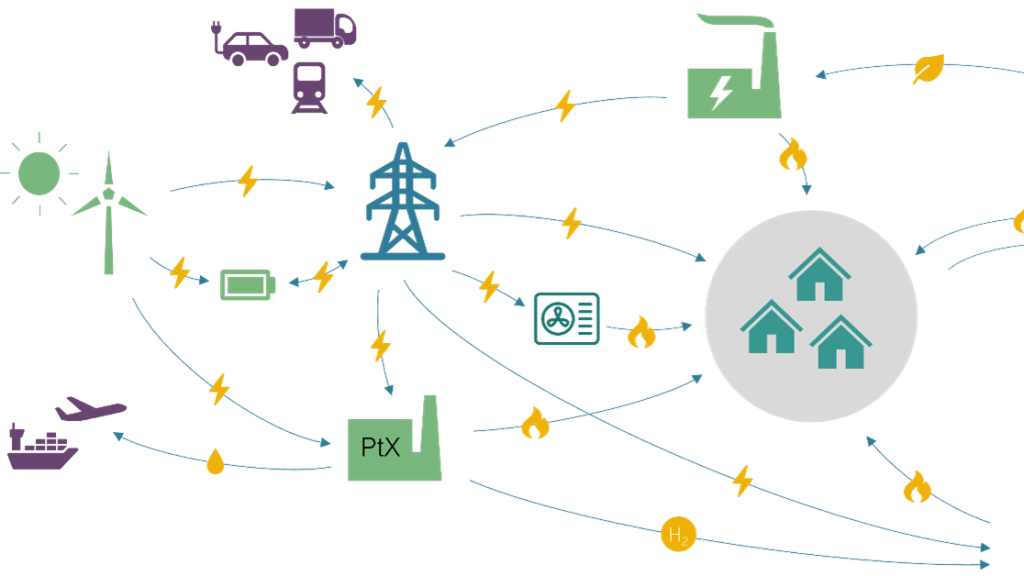
Sweden has set a target of net zero emissions by 2045, with negative emissions after that. Reaching this goal means eliminating the fossil fuels that remain in industry and transport while keeping Swedish industry competitive and the energy supply secure. Energy Modelling Lab built TIMES-SE, a dedicated model of the Swedish energy system, to explore how these targets can be met.
The model covers electricity, heating, industry, transport and the sectors that connect them, including a full investment catalogue for the entire energy sector. It is used to test how variable renewable energy can be scaled up, how electrification and sustainable bioenergy can be balanced against each other, and how Sweden can keep its position as a leader in clean energy while phasing out remaining fossil fuel use.
Comparing pathways to net zero
TIMES-SE is used to compare different climate scenarios and identify the mitigation actions that should be prioritised. The model points to economically optimal pathways for technology deployment and helps clarify the right timing for investment, the choice of technology, and the opportunities for coupling between sectors. Full model documentation is being prepared.
TIMES-SE is built on the TIMES energy systems modelling framework developed under the IEA. It represents the Swedish energy system in detail, from electricity and heating to industry and transport, and includes the full range of investment options available to each sector.
Scenario analysis is used to investigate how different climate policies play out across the modelled system, so that the consequences of each pathway and the mitigation actions they imply can be compared directly.
Results are being compiled into project documentation for IVL Swedish Environmental Research Institute and other stakeholders. This output is still in preparation.
Client: Not applicable (research collaboration)
Reference: Not applicable
Collaborators: IVL Swedish Environmental Research Institute